
There seems to be no end in sight to the decline of newspapers in the U.S., but it's a refreshingly different situation in India, where newspapers are developing ways to stay relevant in readers' lives while also appealing to advertisers.
In India, home of the world's largest English-language readership, Times of India, Hindustan Times, the Mirror tabloids and a variety of localized editions are not only healthy, they're expanding. According to the most recent Indian Readership Survey, circulation is growing by a rate of 8% a year. And newspaper advertising is projected to grow by 12% a year through 2015, according to India's Ministry of External Affairs.
Click on Read more for MEC's POV:
Though lifestyle habits, rising literacy and comparatively low internet penetration play a role in the papers' continued success, they've also built loyalty among readers by emphasizing their local identity in marketing messaging. Ajay Dang, head of marketing for Hindustan Times, believes a personal relationship with readers at the local level is key. "If you look at what we've done," Mr. Dang said, "it's meant to engage with people at the family level and show that how we understand the lives of our readers."
For example, Mumbai residents have "celebrated" two "No TV Day" holidays. It's an ongoing Hindustan Times campaign scheduled for the fourth Saturday of every January. Billboards and print ads within the newspaper adorned with Norman-Rockwell-goes-Bollywood-style imagery of families bonding over crayons and paper urge residents of the bustling metropolis to turn off TVs and take pause.
The paper, whose Mumbai edition was launched in 2005, works with local schools by sending students home with a pamphlet reminding families to participate in the holiday. Kids submit paintings made during "No TV Day" into a competition. Local museums open their doors for free, and city officials organize yoga camps and picnics.
As evidence of the campaign's success, Amul, a dairy cooperative famous for its affordable cheeses and quirky billboard ads, incorporated the concept of the holiday into their own advertising with the slogan "Zindagi on. TV off," which roughly means "Live life, turn off the TV."
"In the newspaper business it's about creating a deeper investment in our readers personally, rather than simply upping circulation," said Mr. Dang. "You attack the competition by making your paper something readers want to claim as part of their life."
The paper's main competitor is the Times of India, which has the highest circulation of any English-language newspaper in the world, an average 7.5 million readers per issue. TOI has won recognition at the Cannes Lions International Festival of Creativity with years of "A Day in the Life Of..." campaigns, including one that brought home two Gold Lions for work highlighting its local Chennai edition. Taking a clear-eyed look at local touchpoint issues, the short film from JWT centered on a song called "Nakka Mukka," which is based around a local idiom.
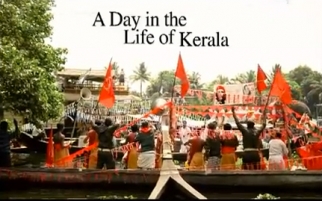
TOI has also undertaken epic community-building efforts, like the "Lead India" effort to inspire grassroots leadership that won the country's first Grand Prix at Cannes. The campaign's latest incarnation was for TOI's edition in the southern Kerala region, bolstering its local bona fides with "God's Own Traffic Jam: A Day in the Life of Kerala."
Set to high-energy local folk music, the video is not a Western tourist's fantasy of lush landscapes and sleepy villages. Instead, it features strife only a seasoned local can appreciate: Two roosters square off in a cockfight. Flag-waving Marxists clash with mainstream political activists dressed in white. Travelers snap pictures of locals congregating behind an emergency barricade.
According to Senthil Kumar, JWT's national creative director, who helped drive both the Kerala and Chennai campaigns, localization is integral to the Times of India's ongoing success story. "If there's one thing a newspaper does," Mr. Kumar said, "it's take a snapshot of a region and paint the portrait of that place on a given day."
In a similar vein, the Mumbai Mirror's "I Am Mumbai" won a Gold Lion at Cannes this year. The black-and-white video from Taproot India dramatizes the everyday lives of "Mumbaikars" or residents of the country's most- populous city.
Deeply ingrained newspaper habits also play a part in the industry's health, creating decades-long relationships with readers. "In India, reading the local paper remains part of the morning routine, despite the growth of internet news. You still have your cup of chai, and the paper," Mr. Kumar said. "Online news is an urban phenomenon here, and you don't move onto it until later in the day, at work."
With fewer smartphones, tablets and computers than in Western countries, it's less convenient for Indians to get their news online. And the web versions of some Indian papers look flat, lacking interactivity and vivid images.
In a recent story for the New Yorker, Ken Auletta visited India to explore the newspaper scene and noted common practices at the Times of India that include letting small advertisers swap equity in their companies for ads, and celebrities' publicists paying reporters to write advertorials about their clients.
Trouble for Indian newspapers, however, may lie on the horizon. Fashionable new websites such as India's Firstpost.com, an Indian site styled after The Huffington Post, are slowly emerging as alternatives to newspapers. In time, they might pose a legitimate threat to print's stronghold on India's morning-news consumption.
An ad for Firstpost.com attacks the tradition of physical papers on environmental grounds while simultaneously promoting the immediacy of online news. In the ad, a thick section of trees is demolished and turned into paper. "You make the environment go through so much," a subtitle declares as a man spreads open the morning paper, "just so you can read the news-one day late."
MEC POV: With Indian newspapers creatively expanding their reach and preserving relevance in the market, MEC included newspapers in the IMC media mix to build awareness and conversion. MEC's recent Indian media landscape analysis showed that while newspapers are a high reach channel, high investment is also required to cut through the clutter and build effective awareness. Newspapers will be complemented by magazine and digital media, which have the highest affinity to the IMC target audience.

No comments:
Post a Comment